
Garden Offices in Oxford
A separate, insulated, properly wired workspace at the end of the garden — so the spare bedroom can go back to being a spare bedroom and the working day has a door on it.
Twenty steps is further than it sounds
Working from a corner of a bedroom works until it does not. The problem is rarely the desk; it is that the work never quite stops, because there is no point in the day when you leave it. A short walk down the garden turns out to do the job that a commute used to.
It also solves a space problem that Oxford houses are particularly prone to. Bedrooms here are not large, and losing one to a desk and a filing cabinet is an expensive way to house a laptop.
- Insulated for year-round use
- Wired data, not wifi repeaters
- Dedicated armoured power supply
- Double-glazed and draught-sealed
- Usually no planning permission needed
- Usually outside building regulations
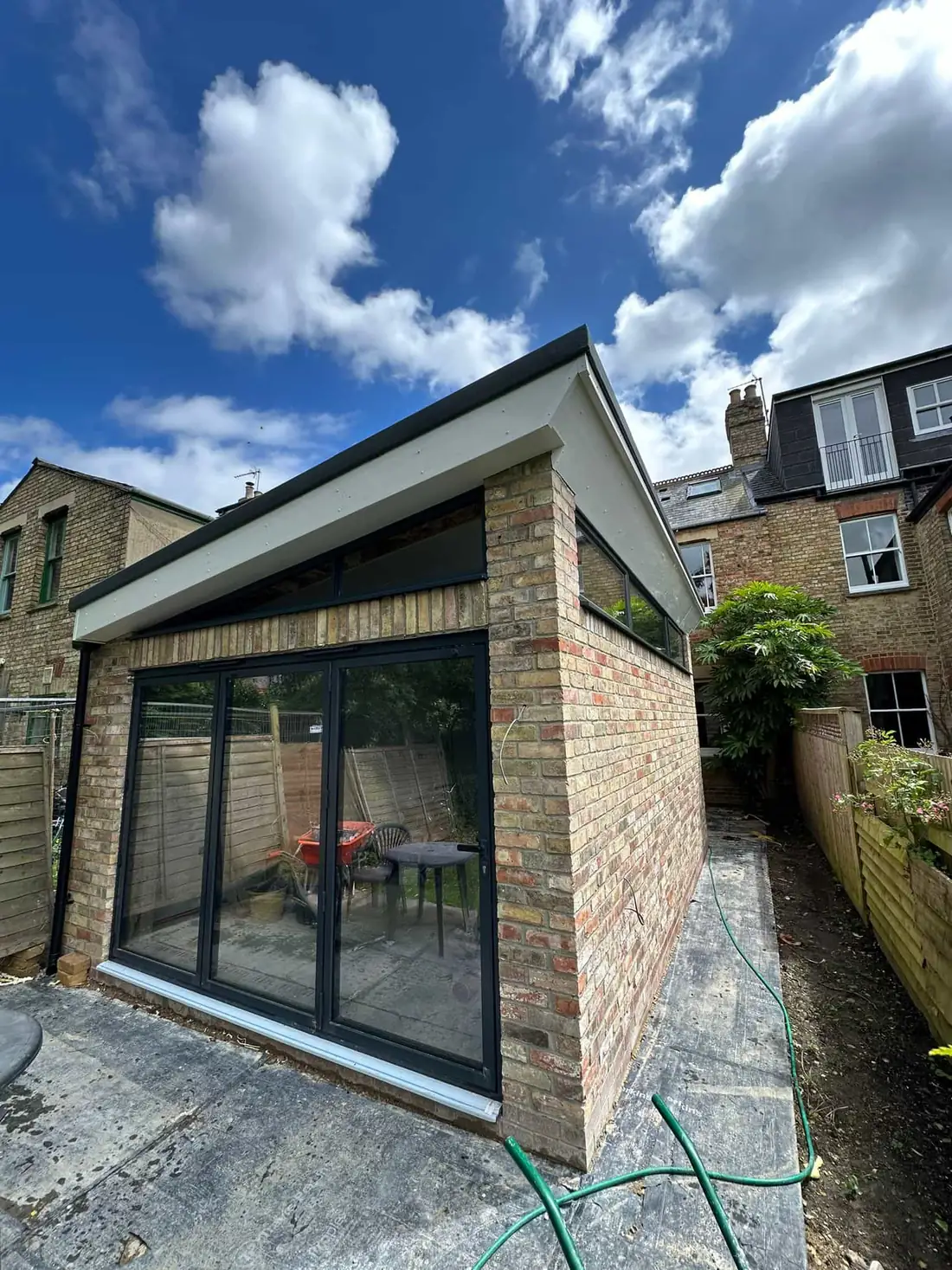
Three decisions that shape the building
Almost every garden office question comes back to one of these. Worth settling them before anyone draws a plan.
Size versus regulations
Under fifteen square metres and you are generally exempt from building regulations. Above it, the exemption depends on distance from boundaries and construction. Worth knowing before the brief creeps.
Which way it faces
Glazing on the sunny side gives you glare on the screen and heat you cannot lose. North light is steadier and far more comfortable to work in all day.
Where services come from
The route from the consumer unit to the building decides the trench, and the trench is easiest to dig once. Power, data and any water for a sink all go in at the same time.
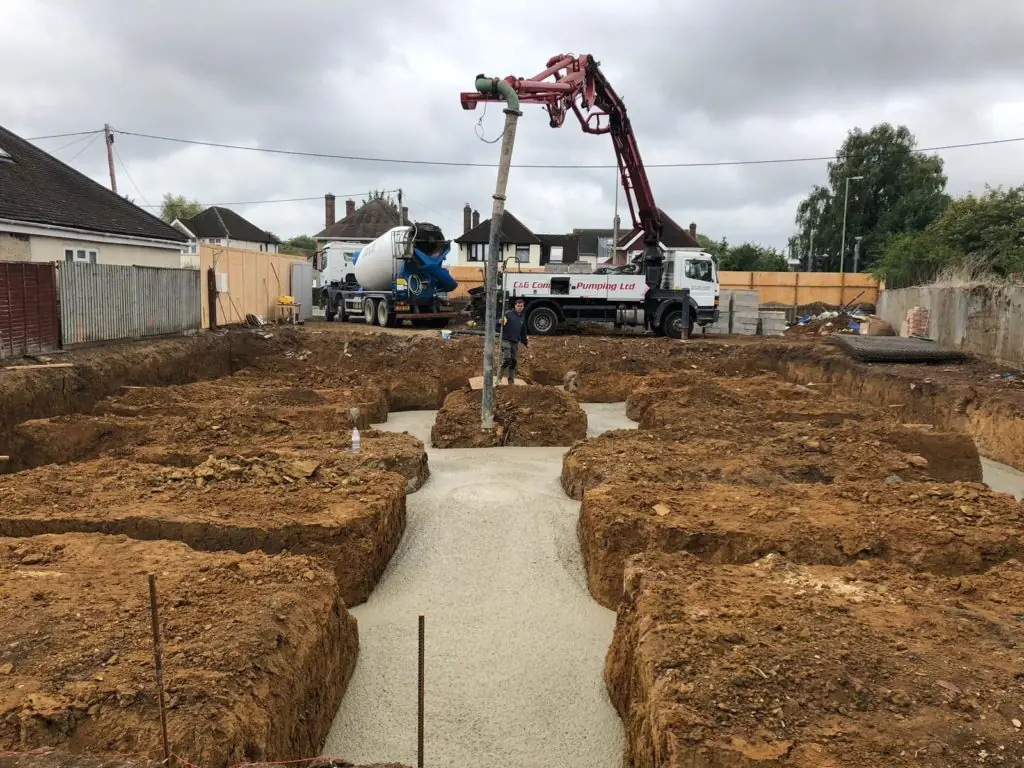
Everything depends on the base
A garden office is a light building on a small footprint, which makes it unusually sensitive to what it stands on. Get the base wrong and the doors stop closing within a couple of winters — the classic symptom of a structure that has moved.
What the right base is depends on your ground. Clay that shrinks and swells, made ground from a previous structure, and mature trees nearby all change the answer. Sometimes that means a reinforced slab; sometimes screw piles into stable ground below.
We look at the ground before quoting a base, which is why our figure occasionally differs from a supplier who quoted the same slab for every garden in Oxfordshire.
Thinking about a garden office?
Tell us roughly what size you have in mind and send a photo of the garden. We will confirm whether it needs permission and what the ground is likely to require.
Garden office questions
How big does a home office need to be?
Smaller than most people first ask for. A desk, a chair, storage and room to push back from the desk fits comfortably in around eight to ten square metres, and staying under fifteen keeps you clear of building regulations.
Where the size grows is when a second desk, a sofa or a meeting space enters the brief. Worth being honest about that early, because it changes both the regulations position and the cost.
Will the broadband reach?
Not reliably over wifi through two external walls, no. That is the single most common complaint about garden offices, and it is entirely avoidable.
We run data cable in the same trench as the armoured power supply while it is open. A wired connection to an access point in the building is stable in a way that a repeater at the back of the house never is.
How do you stop it overheating in summer?
Orientation, glazing specification and ventilation, in that order. A fully glazed south-facing wall looks superb in a brochure and turns the room into a greenhouse by eleven in the morning.
We look at which way the garden faces before deciding where the glass goes, and we would rather talk you out of a wall of glass on the sunny side than build it and let you discover the problem in July.
Can I heat it cheaply?
Yes, if the envelope is right. A well-insulated, airtight building of this size needs very little to hold temperature — an electric panel heater or a small air-conditioning unit that also cools in summer is usually enough.
Running a heating circuit from the house is possible but rarely worth the disruption for a building this size. Insulation is a far cheaper way to buy warmth than heating output.
Does a garden office add value to the house?
It can, though the honest answer is that it is valued less predictably than an extension because it is a separate structure rather than additional floor area within the house.
The stronger case is usually practical: it frees a bedroom that had become a desk, and it puts a door between work and home. Both of those tend to matter more day to day than the resale argument.
What about security?
It is a building at the bottom of a garden with computers in it, so it is worth thinking about. Multi-point locking doors, laminated glazing where the building is overlooked from a path or alley, and lighting on the approach all help.
It is also worth telling your insurer it exists — contents in an outbuilding are frequently treated differently from contents in the house.